Beck - Strange Apparition
Friday, June 18, 2010
Group A: Prisoner's Dilemma (World Cup)
Beck - Strange Apparition
Sunday, May 23, 2010
Pacman's A Dick
Johnny Cash - God's Gonna Cut You DownThursday, May 13, 2010
Cabbages, Kings, and Money
Ooooo, now I'm paid to blog:
http://www.associatedcontent.com/article/2992576/warhammer_40k_getting_started_guide.html?cat=19
Saturday, March 20, 2010
Wednesday, March 17, 2010
Beerventure (Amsterdam 106, Upper West Side)
We made the trek out of Sunnyside to an old faithful named Amsterdam 106. Profile to come, lets get down to the beauty on the screen:The picture does it no justice, but this is Harpoon's "Island Creek Oyster Stout". To be fair, it's really Kate Tame's "Island Creek Oyster Stout", as it is part of the 100 Barrel Series that was inspired either by a divine revelation or a group that really loves making beer. Essentially, they've invented Russian Roulette for beer except losing only means a trip to the porcelin god, while wining is a taste explosion. Every couple of months one of Harpoon's brewers gets to spin the chamber and invent their own brew which is then, in turn, fed to the general population. The result? Our first 5 out of 5.
The dry stout is a thick mix of smoked hickory, coffee, and chocolate perfectly blended to give it a smooth, warm taste. The coffee taste dominates, though not so much as to burn out the taste after a few. If you want my opinion: grab a four pack, shelf the Guiniess, and enjoy this St. Patrick's with a new taste (if not a new look).
http://www.harpoonbrewery.com/index.cfm?pid=28515
Boston is good for something it seems...
Sunday, March 14, 2010
Beerventure (Maggie Mae's, Sunnyside)
I decided to do a little traveling to find a new beer this weekend, though I have several sitting at home. Found this guy at an Irish pub called "Maggie Mae's" less than a block from the apartment. The bar had some good reviews, but quickly disappointed thanks to blasting b-lot techno-pop and a crowd that made the Jersey Shore look like a WASP wedding. The same, unfortunately, can be said about the beer. With a name like "Anchor Steam", I expected a hardy, unfiltered shore lager. I got water instead. It's clean and crisp, but in the same manner that water is clean and crisp. Any taste it does have vanishes immediately, leaving you ready for the real beer. An ABV of 4.9% doesn't redeem it either. Not totally for the dogs though. I would take it over a shwag any day, and there are far worse things. I wouldn't gravitate to it in a store, but it could be a relief in if you find yourself at a college town nickle night. Think of it as a top-shelf beer pong beer.Anchor Brewing's "Anchor Steam Beer": 3 out of 5
http://anchorbrewing.com/beers/
I've got 2 more and a profile in reserve. In the mean time, I wander on...
Wednesday, March 10, 2010
Beerventure (Beer World, Sunnyside)
Beer World will keep me satisfied for a while. I grabbed this one based on the description on the box which reads, "Hop on the Train...Ride off the Rails". With an ABV of 6.8% and a smooth, mild taste, it lived up to its claim. Its hop-y aftertaste gave a little flare that kept it from growing dull through the night. I'd classify it as a high end middle-of-the-road ale. Definitely a classic taste to it.Erie Brewing Company's "Railbender Ale": 4 out of 5
http://www.eriebrewingco.com/beer_railbender.html
I'll be looking for something a little darker and a little more extreme next time.
Sunday, March 7, 2010
Beerventure

I've decided, based upon my love of beverage, that I want to know more about the wonderful beer world that is out there. As such, I have begun a delicious journey to find and sample as many different types of beer as I can afford. What better place to start than Beer World, right here in Sunnyside New York:
Lagunitas' "The Censored Rich Copper Ale": 4 out of 5
Drinkable for the whole night while maintaining a distinctive flavor.
http://www.lagunitas.com/beers/censored.html
A copper ale is an ale that is aged in oak casks. This allows it to keep its copper color and gives it that distinctive middle-of-the-road (between hops and malt) flavor.
Let the Beerventure begin!
Monday, February 15, 2010
How To Succeed As A History Major
Thursday, January 21, 2010
In God We Trust
Serj Tankian - Lie Lie Lie
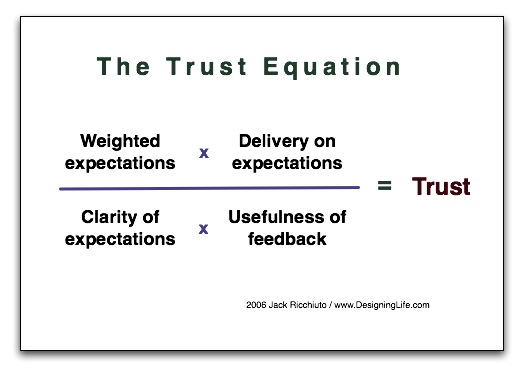
Trust is impossible to understand.
What is trust? Defined by the dictionary trust is “to have confidence or faith in”, a definition I, for once, am not appalled by. It does, however, present two very different versions of the word. Having confidence in something, including another being, is easily understood and accomplished. Generally, if something is consistent or proves itself in some way, it leads others to have confidence in it.
Having confidence in something, however, is much weaker than having faith in something. It requires belief, which assumes some degree of unknown regarding the object or person. In order to have faith in something, there has to be some degree of doubt, otherwise it isn’t faith. Let me pause for a moment to allow the person who convinced me this was true to realize they did.
So there are two versions of trust. The first, having confidence in something, can be found commonly. Ants, with no real measure of intelligence, work as a colony. They have complete and total confidence in the other ants to do their jobs and keep the colony alive. Wolves, which posses a high level of intelligence, have total confidence, or trust, in their pack leader.
For humans, however, the first definition does not justify the way we use the term. When you fully trust someone, you give them a blank check to make decisions that can deeply impact your immediate existence. In addition, you willingly believe everything that is told to you by that person without questioning sources or motive. From a survival standpoint, it seems irrational. Yet it is considered a necessity for intimate relationships (not just love, although this is a key component of any relationship involving love). When someone trusts another, and the word is used in that manner, they do not simply have confidence in them; they feel safe giving their very lives to them. You cannot give anything greater.
So where did it come from? Why is trust so much deeper for humans than it appears to be for our ecological companions?
It could be, as a vast majority of human behavior is, a self-fulfilling aspect of our existence. If we are able to trust another, and that trust is true, than we are able to reduce the number of decisions we need to deliberate carefully. Instead, we can allow the trusted other to deliberate half of those decisions, and we deliberate the other half. This leads to an overall better life, as each decision was thought out for longer and therefore has more beneficial consequences. This seems to make sense.
That is, assuming the other person didn’t exist before you trusted them. Since this is unreasonable, we have to assume that that person also has a number of decisions to make. Now, if you truly trust them, and they truly trust you, then they will also confer half of their decisions onto you. Now you have the same number of decisions. That was pointless.
Perhaps trust is a side-effect of our society, an evolution. Society is brutal, unforgiving, and stressful. Walking in this society alone is painful and absurdly difficult. To cope with their own monstrosity, humans developed a method in which to link themselves with one or more individuals to form a pack. This pack then exists together; delegating tasks and decisions as it best benefits the group.
Or maybe trust is just a delusion. We yearn to trust others so that we can believe that we don’t live in a world where self-survival is the only thing that matters. It would explain our stories of love and sacrifice. It would explain our desperate attempts at relationships and our disgust at failed marriages.
Going further, what if trust is malicious? We seek to take the burden of the world off ourselves and dump it onto another so that we can escape our reality, knowing that person will be unable to handle both lives. Yet, when someone trusts us to make their decisions, we insist on input from them. We refuse to take the matter into our own hands for fear that it will lead to further burden from that person.
Despite its complexity, I trust someone will have an answer someday. See what I did there?
Tuesday, January 19, 2010
Hit the Road, Jack
Deer Tick – Baltimore Blues No. 1
Jack of all trades, master of none. It’s a commonly understood phrase that’s used uncommonly.
They exist, but it’s incredible difficult to spot one. Jacks are individuals that manage to have raw talent at just about everything they put their minds to but rarely, if ever, develop this talent. They tend to lack a passion for anything in particular. Not to say that they aren’t looking. Instead, many simply have been unable to find something in which they are interested in enough to drop their meandering and settle.
They flow from experience to experience like the kids in that awesome Capri Sun commercial:
So why is the phrase so uncommon? Likely, after thinking about it, you probably know or have met an individual who fits this description. If not, think harder. They’re around, and there are quite a few of them. So why don’t we regularly acknowledge them?
At first thought, this would seem to come from jealousy. In reality, though, they legitimately remain unnoticed as a Jack through most, if not all, of their existence. Consider this: if someone is fairly good at whatever they try but they rarely pursue anything in depth, won’t there always be someone else around who has pursued whatever that is passionately? Won’t that person overshadow the Jack, since they are a master at that thing?
You can find a master of essentially anything. Whether it’s a sport, art, or profession, there are individuals who are passionate about it. These individuals are masters of their craft, devoting most of their energy and time to that specific thing. These people shine brightly in their chosen world, and this is revered by our culture. Devoting yourself to something, anything, is considered a point of pride for us. Consequently, those who do not devote themselves to anything in particular are considered to be still looking for what it is that they will devote themselves to.
The idea of a Jack is not just ignored, it’s neglected completely. In fact, declaring yourself a Jack would be considered narcissistic by the vast majority of people, as the immediate reaction to someone claiming they are good at something is to assume they are passionate about it. Claiming to be a Jack would be to claim you are passionate about everything, which is entirely unreasonable. To make it more interesting, Jacks have the same concept of what it means to be good at something, since they are part of our society. This means that the Jacks themselves are unaware of their own identity, smothering the possibility of them identifying themselves as such.
This leads to a self-defining issue amongst the Jacks. Instead of a sub-culture you get stray wanderers seeking something they can really devote themselves to, a “hidden talent”. Many never will believe they never find it, while the lucky few will realize they’ve been a master all along. A master of adaptability.